
FOR families & relationships
Understand the dynamics shaping your relationships.
Every relationship develops patterns—in how people communicate, respond to pressure, manage differences, express needs and stay connected.
Recognising what is shaping these dynamics creates greater choice—to change what isn’t working, strengthen what is and develop healthier, more intentional ways of relating.
Couples | Parents | Families | Relationships

YOU MAY RECOGNISE THIS
The topic changes—but the same dynamic keeps returning.
Perhaps conversations follow a familiar path. Someone becomes defensive, withdraws, reacts quickly, tries to keep the peace or takes responsibility for making everything okay.
Even when everyone has good intentions, established patterns can influence what each person notices, assumes and does next. Over time, the response itself can become automatic.
This isn’t about deciding who is right or identifying one person as the problem. It’s about understanding what happens between people—and how each response contributes to what happens next.
Recognition points
> Small disagreements repeatedly become bigger conversations
> The same issues return without feeling fully resolved
> One person pursues a conversation while another withdraws
> Needs, expectations or boundaries remain unspoken
> Stress changes the way family members communicate
> Everyone wants things to improve but falls into familiar responses
The dynamic isn’t created by one moment or one person. It develops through repeated interactions—and that means it can be understood and changed.
WHAT YOU CAN WORK ON
Strengthen the way you communicate,
respond and connect.
Every relationship has strengths as well as patterns that could work better. The focus isn’t on creating perfect relationships—it’s on understanding the dynamics between people and developing more useful ways of navigating them.
COMMUNICATION & UNDERSTANDING
Develop clearer ways to express needs, listen and understand what may be happening beneath a response.
Conversations and misunderstandings
Needs, expectations and assumptions
Listening and feeling understood
CONFLICT & RESPONSES
Recognise what happens when tension rises and interrupt the reactions that keep familiar cycles going.
Conflict and recurring disagreements
Defensiveness, withdrawal or escalation
Repairing after difficult interactions
CONNECTION & FAMILY DYNAMICS
Strengthen the patterns that support trust, cooperation and healthier ways of relating.
Boundaries and shared responsibility
Parenting and family relationships
Connection, trust and mutual support
"The goal isn’t for everyone to think or respond in the same way.
It’s to create greater awareness, clearer choices
and dynamics that work better for the people involved".
THE CAPACITY CYCLE™
Every response becomes part of the next interaction.
Two people can experience the same situation and interpret it very differently. Each person brings their own expectations, beliefs, past experiences and current capacity into the interaction.
Those interpretations influence how each person feels and responds. That response then becomes part of the situation the other person is reacting to—creating a dynamic that can continue even when neither person intended it.
Activating Event or Situation
A conversation, behaviour or shared situation occurs.
Thoughts
Each person interprets what happened and what it means.
Feelings
Those interpretations influence emotional and physiological responses.
Response or Behaviour
Each person speaks, reacts, withdraws, avoids or takes action.
Result or Outcome
The responses shape the interaction and influence what happens next.
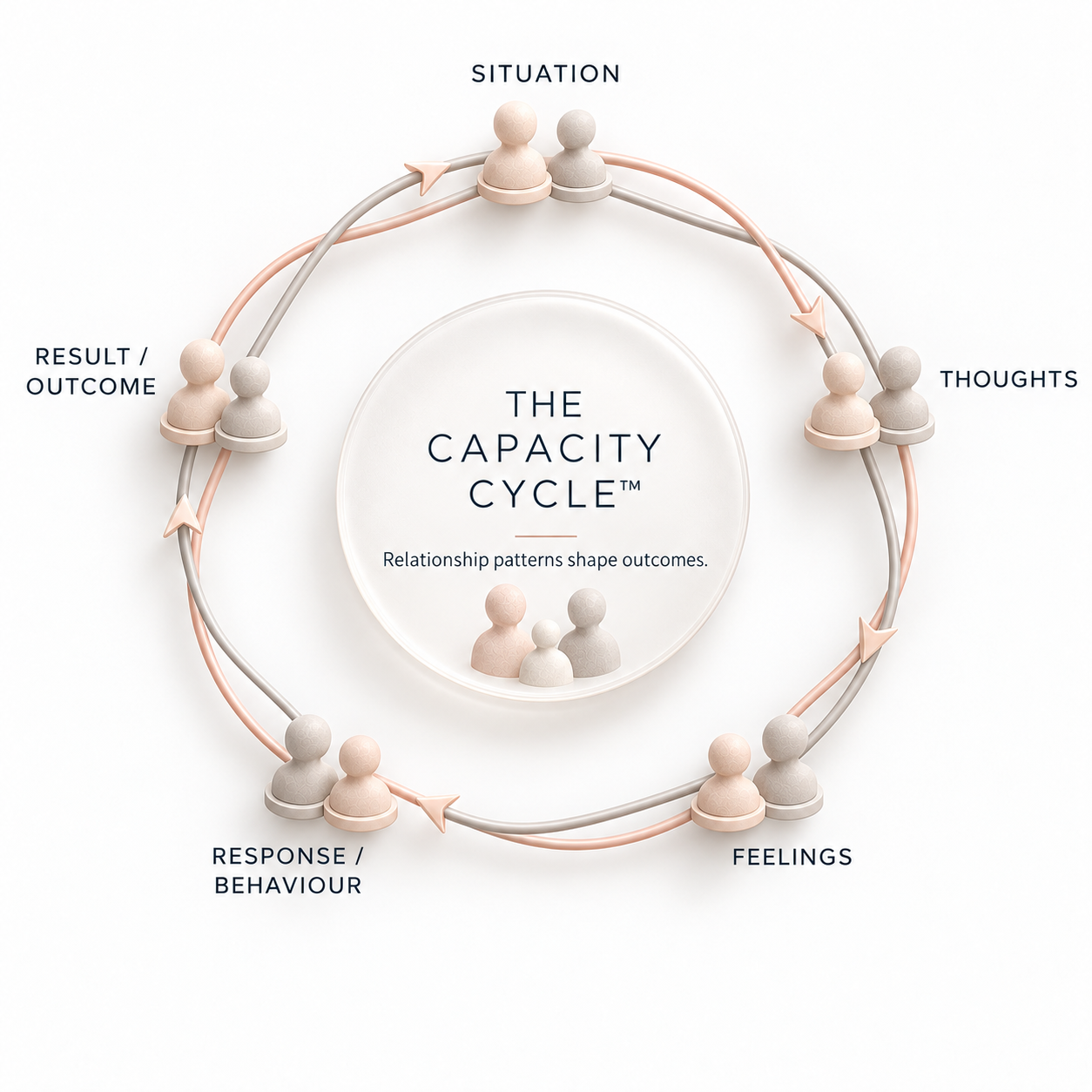
When people can recognise their own cycle—and understand how it interacts with someone else’s—they have more opportunity to interrupt the familiar dynamic and respond differently.
More understanding. More choice.
Healthier dynamics.
Understanding relationship patterns doesn’t remove every disagreement or make everyone respond perfectly.
It helps people recognise what is happening sooner and create more useful ways of communicating, responding and reconnecting.
CLEARER COMMUNICATION
Move beyond assumptions and express what needs to be understood more effectively.
Communicate needs and expectations
Listen without immediately defending or solving
Approach difficult conversations with greater clarity
MORE USEFUL RESPONSES
Recognise familiar reactions and create space to choose what happens next.
Reduce escalation, withdrawal and avoidance
Respond more constructively under pressure
Repair interactions after things go wrong
STRONGER CONNECTION
Build patterns that support trust, cooperation and a greater sense of being understood.
Strengthen emotional connection
Create clearer boundaries and shared responsibility
Develop healthier ways of relating over time
"Better relationships aren’t created by avoiding every difficult moment. They’re created by understanding the dynamics within those moments—and learning how to navigate them differently".
A FREE PLACE TO BEGIN
Untangling the Mental Mess
The patterns we bring into relationships often begin with how we interpret situations, respond to pressure and make sense of what other people say and do.
This free training will help you better understand the connection between your thoughts, feelings, responses and outcomes—giving you a practical starting point for changing what happens next.

60 Minute On-Demand Masterclass
A psychology-informed training that explains how thoughts, feelings and responses interact—and how repeated patterns can influence the outcomes we experience.
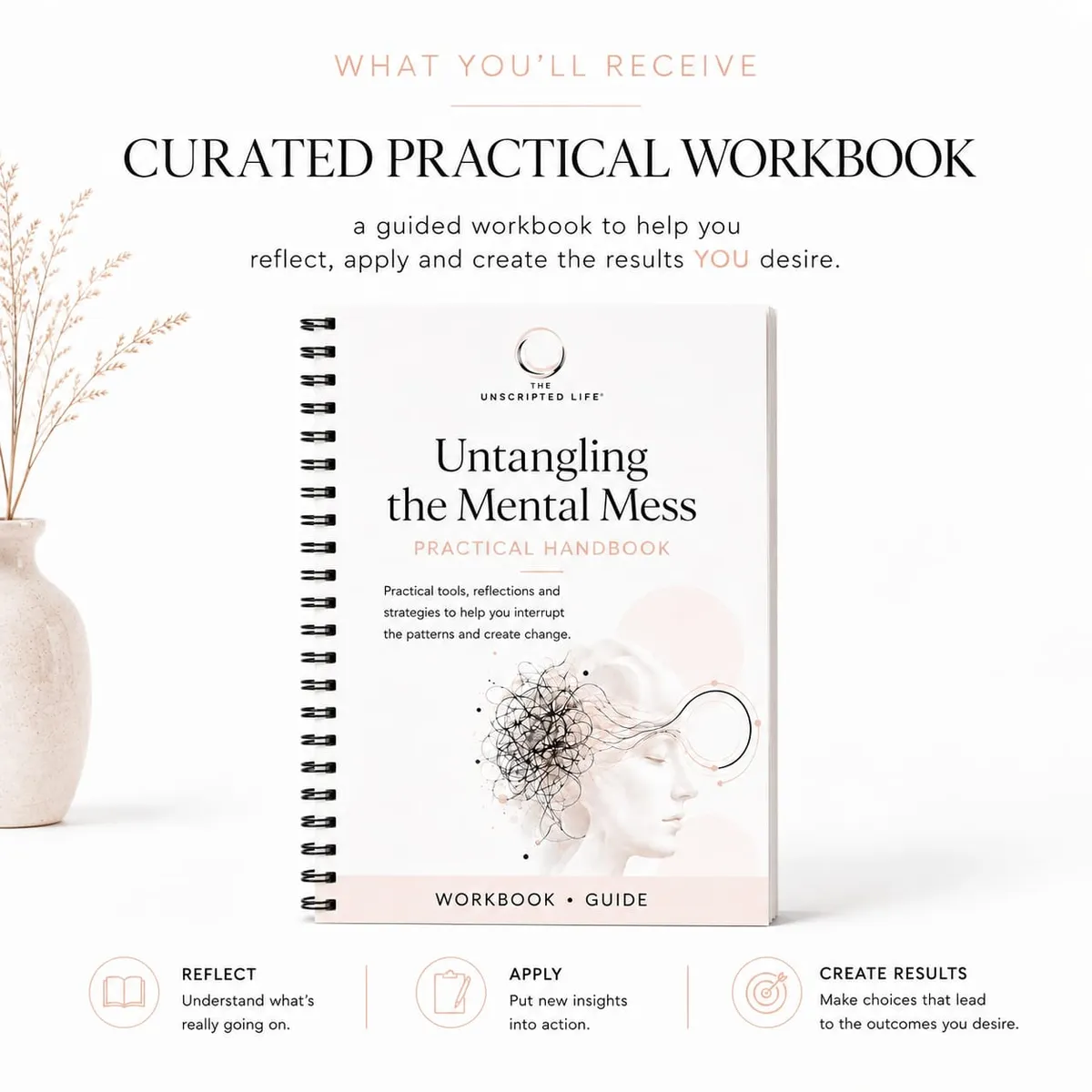
Curated Practical Workbook
A downloadable guide designed to help you follow along, capture your insights and apply what you learn to your own circumstances.
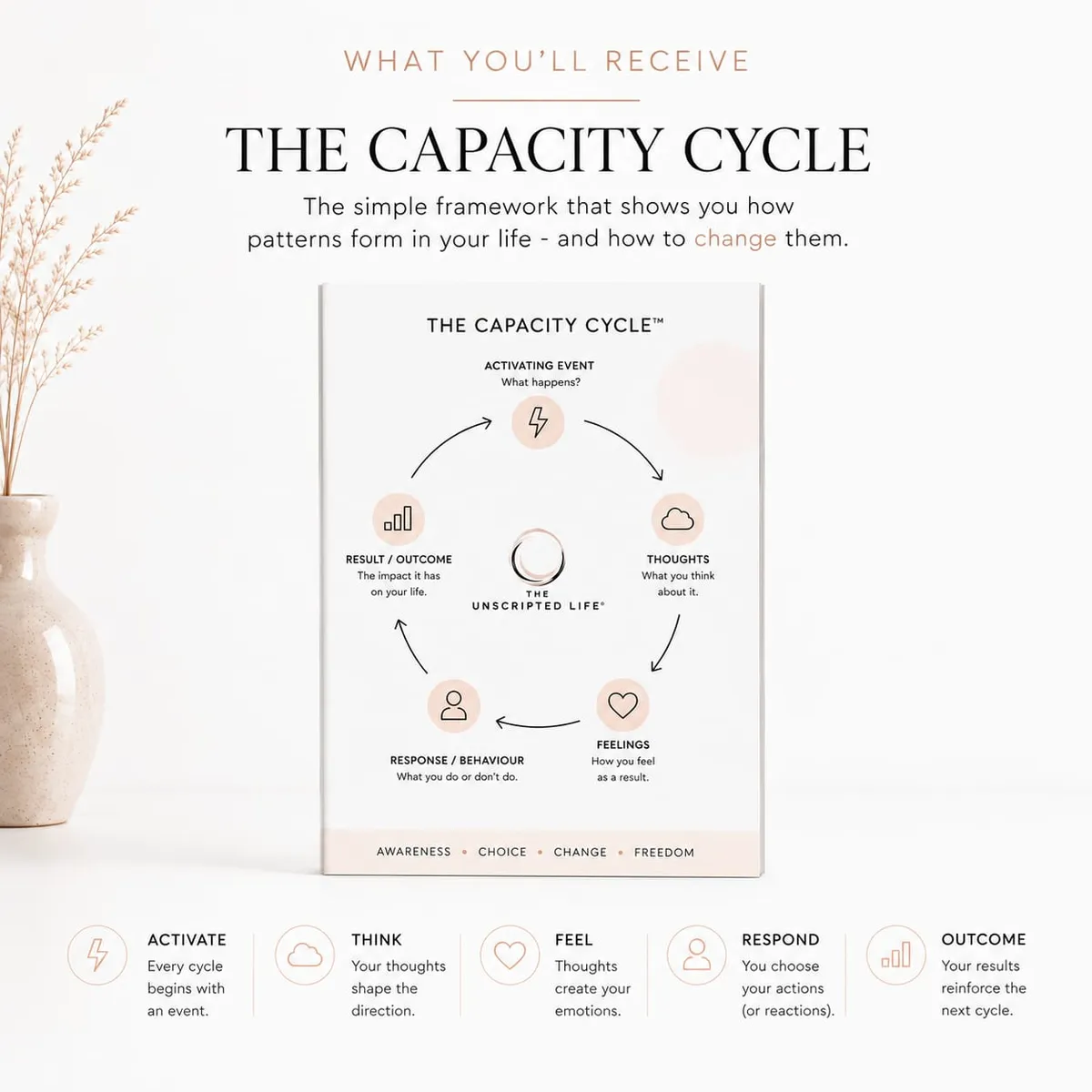
Our Signature Framework
Begin identifying the recurring thoughts, assumptions, reactions and behaviours that may be adding to the pressure or shaping your results.
CREATE A CLEARER NEXT STEP
Learn how automatic thought patterns influence your reactions, and why the same situations can keep producing familiar outcomes
COMPLETELY FREE
Learn how to create more space between what happens and how you respond, along with
practical ways to begin untangling mental noise and respond with greater intention.


